

'Too much of it has bought points': Parks Tau admits B-BBEE can't show it has cut poverty or unemployment, and promises reform
Trade, Industry and Competition Minister Parks Tau told a B-BBEE research conference in Johannesburg on Monday that a decade of data could not show the policy had reduced poverty, unemployment or inequality. He said government would reform B-BBEE rather than abandon it, shifting the focus from scorecard compliance to productive ownership.

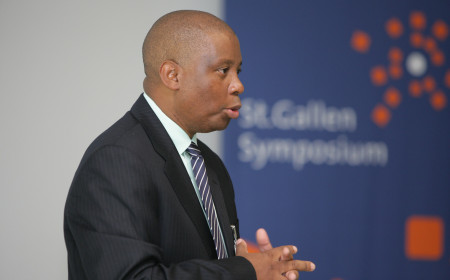
Trade, Industry and Competition Minister Parks Tau has conceded that broad-based black economic empowerment (B-BBEE) cannot yet show that it has reduced poverty, unemployment or inequality, the three problems it was meant to tackle. Speaking at a B-BBEE research conference in Johannesburg on Monday, he said the policy had measured compliance rather than change, and that government would reform it rather than retreat.
What the review found
Tau said the B-BBEE Commission's review of 2013 to 2023, based on data from 56 verification agencies and 28,131 certificates, contained some good news: average ownership scores rose from 12.4 points in 2013 to 21.6 points in 2023. But that is still short of the 25-points-plus-one-vote target, and progress has stalled since 2018, he said, according to TimesLIVE and Inside Politics.
"After ten years of data, the commission could not draw firm conclusions on whether B-BBEE has reduced unemployment, inequality or poverty," Tau said. He added that roughly R20bn a year goes into enterprise and supplier development, money he said should have built a generation of black-owned manufacturers and suppliers. "Too much of it has bought points instead."
He also warned against what he called nominal transformation: black ownership of firms at the bottom of a value chain, or shareholdings that bring no control and no dividends.
Reform, not retreat
Tau described B-BBEE as under pressure from several sides: recast abroad as discrimination, challenged in court at home, and written off in public debate. He noted that employment equity targets had survived challenges in the High Court, Supreme Court of Appeal and Constitutional Court, but that six constitutional challenges remain, Inside Politics reported. Earlier this month, US Ambassador Brent Bozell linked South Africa's loss of AGOA trade benefits partly to Pretoria's stance on B-BBEE ownership requirements.
"Some hope we will retreat. Others expect us to dig in and change nothing. We will do neither," Tau said. He said draft amendments to the Codes of Good Practice were gazetted in January and draft amended B-BBEE regulations were published on 13 November for 30 days of public comment. The direction, he said, is "from compliance to outcomes", with the focus on who owns productive assets, manufactures, supplies and exports.
B-BBEE Commissioner Tshediso Matona said the scorecard shows the policy is being implemented, with progress on ownership, skills development and small-business support, but not what impact it has, a gap he said the law needs to address. He added that the R26bn spent on enterprise and supplier development in 2021 was only about two-thirds of what full compliance would require.
The conference, convened by the Johannesburg Business School at the University of Johannesburg, will send a policy brief to the DTIC and the Presidency within 30 days, Tau said.
Related: MPs reject US pressure on transformation policies · Exporters plan Washington mission over AGOA exclusion
Sources
What's Your Reaction?
 Like
0
 Dislike
0
 Love
0
 Funny
0
 Wow
0
 Sad
0
 Angry
0

The Republic Times newsroom: independent, ad-free South African journalism. Story tips and corrections: info@republictimes.co.za.









Comments (0)