

The Property Investor Who Set Out to Make Millionaires
Albert van Wyk of Pretoria made his first million at 22 by putting bursary money into property, and has since turned that story into a mission to teach young South Africans how to build wealth.
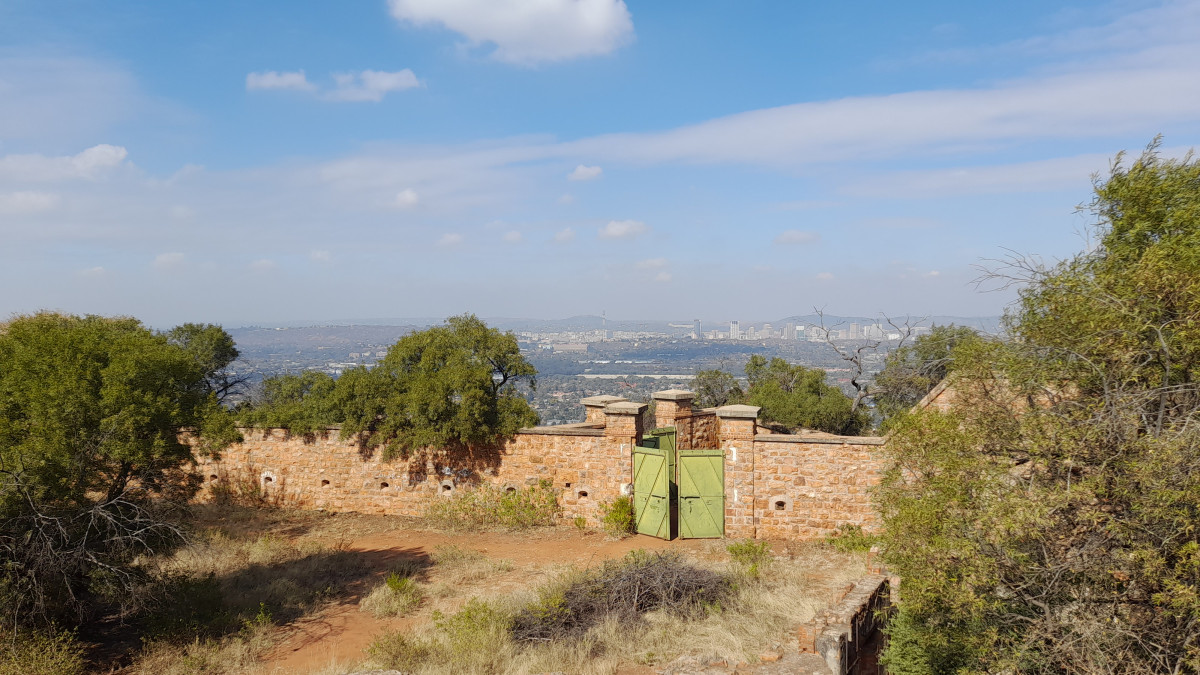
Albert van Wyk of Pretoria made his first million at 22 by putting bursary money and a string of small businesses into property. Since then he has turned that story into a public mission: teaching South Africans, especially the young, how to build wealth the way he did.
A bicycle he could not have
Van Wyk was born in Pretoria and still lives in the city’s Moot. In June 2017, when the Pretoria News profiled him as a 24-year-old from Waverley, he was already being called one of the country’s youngest self-made millionaires.
The spark, he later said, came much earlier. When he was ten, his father told him the family could not afford the bicycle he wanted. “When my dad told me we couldn’t afford that bike, my mind sparked into action…I decided: How can I find a way to get this bike?”
He sold key rings and toys at school, painted house numbers on kerbs with his younger brother, cut lawns, taught guitar, hired out cars for matric farewells, and bought and sold almost anything he could turn at a profit. Those side ventures, he has said, taught him how money is made — and how it is lost.
His father also gave him a rule he still repeats: “My dad taught me that if you want to become a millionaire, you need to learn from a millionaire.” Van Wyk began reading about people who had already done it.
The bursary deal that bought a house
The turning point came at the end of school. He struck a bargain with his father: if he won a bursary to the University of Pretoria, he could keep the bursary money and invest it, while his father still paid for his studies as planned. He has written that he spent the mid-year holiday of his matric year studying to secure the marks, and he got the bursary.
He used that money, together with what he had earned from his businesses, as a deposit on his first property at 19. In an interview on Jacaranda FM he said he also approached an investor to put in further capital, and planned to turn the house into student lodgings. He studied industrial engineering, then worked in industry for just over a year after graduating.
By 23, the properties were earning more than his salary. “By 23, I was financially independent,” he later recalled. He quit the job and went into property full time, mixing buy-to-let rentals with “buying to flip”: purchasing rundown houses, renovating them and selling at a profit. He has also built construction, media and property-development businesses.
His own websites now say that by the age of 32 he had built a property portfolio worth more than R50 million. That figure has not been independently audited in the reporting reviewed for this article. It is the claim on which he hangs much of his teaching.
How he says a portfolio is built
The method Van Wyk now teaches is, in essence, the method he says he used. Choose the strategy first — flipping, buy-to-let, short-term rental or development — then choose the property, not the other way around. Location, return on investment and a clear exit, he tells students, matter as much as instinct. He offers a course on what he calls his “golden strategy,” which combines flipping, buy-to-let and development, and another on using leverage and “perceived value” to recycle capital into the next deal.
On Jacaranda FM he offered three habits: get a financial education; live lean, and do not spend on clothes, cars and watches as if you were already rich; and start investing, so that income can expand. A later Jacaranda profile noted that at 26 he still lived with his parents and used a second-hand phone. “To work hard is also a lifestyle,” he told the Pretoria News.
A mission to make millionaires
Van Wyk has been unusually public about wanting other people, especially schoolchildren, to follow the same path. He has said he always wished an entrepreneur had come to his school to mentor him. After making his first million, he made that his life’s work.
In 2017, after two years of writing, he self-published How to Become a Millionaire at 22. He printed 100 unedited copies and invited five learners from each of four schools in his community to the launch. He later published a second title, How to Buy Your Happiness, and has appeared on Jacaranda FM, 5FM, and Ontbytsake and Die Groot Ontbyt on kykNET.
The teaching then moved into classrooms. He partnered with the national Young Entrepreneurs programme on a “Young Millionaires” course covering mindset, goal-setting, starting a business and investing — including the idea he calls “keep your rabbits”: once you make money, do not spend it; put it to work. He also runs Die Eiendom Akademie, an online academy of more than 20 property courses, live workshops and one-to-one mentorship, presented as the strategy he used to grow his portfolio.
The most visible expression of the mission is Maak My ’n Miljoenêr (“Make Me a Millionaire”), a television competition and mentorship programme he founded for high-school entrepreneurs. The aim is to make entrepreneurship visible in schools and to mentor young people who already have businesses. In 2026, Van Wyk and his team visited 96 high schools and spoke to more than 120,000 learners, according to ATKV Resorts, a partner in the competition, and Maroela Media. Finalists attend workshops, face a “Brandbank” grilling by judges, and compete in real business challenges. The series airs on ViaTV (DStv channel 147). The winner receives a trophy, R50,000 in cash, prizes, and a year of mentorship with Van Wyk. Previous title-holders — Matthew Blauw (2022), Shaniqua Steenkamp (2023), Jason Coulson (2024) and Riaan du Toit (2025) — have returned as mentors for the next cohort.
The programme measures contestants on profit, turnover and growth in their school-age businesses, not on overnight property fortunes. The scale of the bet is clear: the habits that got a Pretoria teenager onto the property ladder can be taught to the next person willing to start small.
What his story asks of the reader
Van Wyk’s own account has been consistent across nearly a decade of interviews. Start before you feel ready. Learn from people who have already made money. Keep costs low and reinvest what you earn. Put your first serious capital into an asset — in his case, a house — rather than into a lifestyle. And once you have a method that works, teach it.
“Everyone had it in them to become a millionaire if they set their mind to it,” he said in 2017. The practical sequence behind his rise is clear enough: a bargain struck with his father, a first property at 19, a portfolio that later paid more than a salary, and a long public effort to hand the same tools to young South Africans.
Related: Octodec's latest Pretoria residential results and Stefanutti Stocks' latest construction results.
Sources
- IOL / Pretoria News — Tycoon, 24, shares secrets of his success (6 June 2017)
- Jacaranda FM — 'Everyone can become a millionaire if you set your mind to it'
- Jacaranda FM — Albert van Wyk: Three tips on how to become a millionaire
- News24 / PE Express — Millionaire entrepreneur to share story (29 April / 1 May 2019)
- Business Day — Two wealthy authors who write to change lives (25 June 2018)
- Albert van Wyk — official site
- Millionaire at 22 — Young Millionaire course (Session 6: Keep Your Rabbits)
- ATKV Resorts — High school entrepreneurs discovered across South Africa (21 April 2026)
- Maroela Media — Maak my 'n miljoenêr | Top-20 aangewys (31 July 2026)
What's Your Reaction?
 Like
0
 Dislike
0
 Love
0
 Funny
0
 Wow
0
 Sad
0
 Angry
0

The Republic Times newsroom: independent, ad-free South African journalism. Story tips and corrections: info@republictimes.co.za.







Comments (0)