

Figures do not show a mass Afrikaner exodus to Mozambique
United Nations estimates put about 21,000 South African-born people in Mozambique in mid-2024. Some commercial farmers have worked there for decades, and a few cite land-reform risk, but the figures do not show a mass exodus caused by BEE or DEI policies.
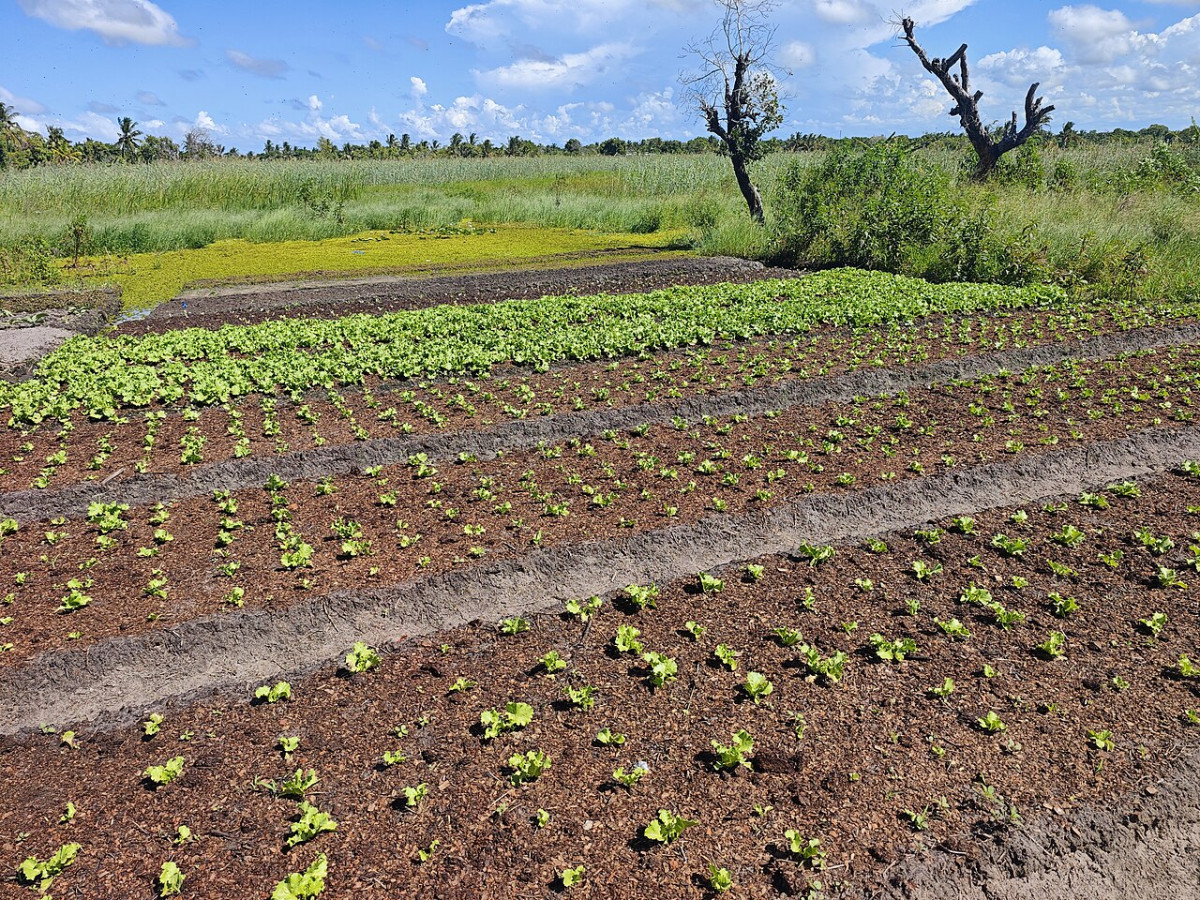
Claims of a mass Afrikaner exodus from South Africa to Mozambique, driven by Black Economic Empowerment or so-called DEI policies, are not supported by the official figures that exist, or by recent interviews with farmers who work on both sides of the border.
The United Nations Department of Economic and Social Affairs' International Migrant Stock 2024, as compiled by Migranto and WorldDataCanvas, estimates that 21,022 people born in South Africa were living in Mozambique at mid-2024 — the seventh-largest such community abroad, far behind the United Kingdom, Australia, the United States, New Zealand, Canada and the Netherlands. The figure covers all South African-born residents. It does not identify Afrikaners or commercial farmers, and it does not say when people arrived or why they moved.
Statistics South Africa does not publish a current official emigration series by destination and race. In the 2016 Community Survey, as explained by Africa Check, Mozambique was among the top three reported destinations for South Africans who left between 2006 and 2016, but the survey had no racial breakdown and is now a decade old.
A long-running farmer presence
South African commercial farmers have been present in Mozambique for decades, often farming in both countries rather than leaving altogether.
In the mid-1990s the South African Chamber for Agricultural Development in Africa (SACADA) entered a joint venture, Mosagrius, awarded a 50-year concession over about 220,000 hectares in Niassa province. The scheme never became a large settlement. By November 1999, when SACADA withdrew, only 24 commercial farmers — 14 from South Africa and 10 Mozambicans — had moved onto it, The Namibian reported, citing AFP.
A later wave was more organised. In 2011 and 2012, Agri SA and AgriSAMoz said about 800 to 950 South African farmers had interests in Mozambique, many in Gaza, with others in Maputo, Manica and Niassa. Dirk Hanekom of AgriSAMoz told Beeld that about 60% were actively involved, mainly in sugar, bananas and cattle. Agri SA vice-president Theo de Jager cited uncertainty over land claims, and high electricity and labour costs, as reasons farmers were looking north. Those figures are 14 years old. They describe "interests" and land applications, not a census of families who emigrated, and Republic Times could not find an updated official headcount for 2024 to 2026.
What farmers say now
In a Farmer's Weekly report of 8 April 2026, Joachim Prinsloo of Sunreaped said his Mozambican operation was set up in 2006 to diversify risk and expand banana production after he struggled to find more suitable land in South Africa.
Charlie van Dyk, director of Novasun, said the company began farming bananas and macadamias in Mozambique in 2008 after a land restitution claim of about 3,000 irrigated hectares was settled in South Africa. Citing his family's earlier experience of land expropriation in Kenya in the early 1970s, he said relocating banana production "allowed us to continue serving the South African market while mitigating long-term land tenure risk." He also warned that "concentrating production in a single country, particularly one still grappling with land reform uncertainty, increases systemic risk."
Neither farmer described a community-wide exodus, and both rejected the idea that Mozambique is a cheap alternative. Van Dyk said audited figures showed a saving of R13.85 per carton of bananas on the wage bill, offset by R17.82 in cross-border costs, for a net extra cost of about R4.87 a carton into South Africa. Prinsloo said many inputs have to be imported and electricity tariffs in the two countries are now similar. Van Dyk said his operation lost about 25 working days last year because of political unrest after elections.
BEE, "DEI" and the Expropriation Act
"DEI" is a term more often used in the United States. In South Africa the official policies in this debate are broad-based Black Economic Empowerment (B-BBEE), employment equity and land reform. Republic Times did not find a 2024–2026 statement from Agri SA, TLU SA, Saai or a named farmer attributing a move to Mozambique specifically to B-BBEE or to "DEI".
There is, however, a documented argument at home about property rights and transformation policy. AfriForum said in February 2025 that the Expropriation Act "threatens property rights," and that it remains committed to Afrikaners' "future at the southern tip of Africa." The Democratic Alliance has taken the Act to the Western Cape High Court, arguing that provisions allowing "nil" compensation put property rights at risk.
The government rejects the claim that the Act is a vehicle for land seizures. When the law was signed in January 2025, President Cyril Ramaphosa said it aligns expropriation with section 25 of the Constitution, forbids arbitrary expropriation, and requires an authority to try to reach an agreement with the owner first. In May 2025, Land Reform and Rural Development Minister Mzwanele Nyhontso said no land had been expropriated since the Act took effect, and that land for restitution and redistribution was being bought through negotiated agreements. The department said 3.9 million hectares had been acquired since 1995, at a cost of about R26.6 billion. Parks Tau has said B-BBEE cannot show that it has reduced poverty or unemployment, and MPs have rejected US pressure to abandon those policies.
Land in Mozambique is not privately owned in the South African sense. Under Land Law 19/97, "the land is the property of the State and cannot be sold or otherwise alienated, mortgaged or encumbered." Investors may obtain a direito de uso e aproveitamento da terra (DUAT), a right of use and benefit, generally for up to 50 years and renewable once. An Islamist insurgency has also been fighting in Cabo Delgado, in the far north, since 2017. The provinces most often named for South African farmers — Maputo, Gaza and Manica — lie in the south and centre.
The evidence is of a long-standing commercial farming presence, with some growers citing land restitution and tenure uncertainty in South Africa as a reason to diversify across the border. It is not evidence of a mass Afrikaner exodus to Mozambique caused by BEE or DEI.
Related: Parks Tau: B-BBEE can't prove it cut poverty or unemployment · MPs reject US pressure on transformation policies
Sources
- UN DESA — International Migrant Stock 2024
- Migranto — South African diaspora by country (UN DESA 2024)
- WorldDataCanvas — South Africa migration data, UN DESA 2024
- Africa Check — How to talk about migration in South Africa (2016 Community Survey)
- The Namibian / AFP — SA ditches Mozambique on farming joint venture, 3 November 1999
- Verdade — 800 farmeiros sul-africanos instalam-se em Moçambique, 4 January 2011
- Farmer's Weekly — Train to Mozambique starts rolling, 9 December 2010
- Farmer's Weekly — Mozambique recruits SA farmers, 25 May 2012
- Bizcommunity / Beeld — SA farmers looking north, 21 November 2012
- Ruth Hall — The next Great Trek? South African commercial farmers move north, Journal of Peasant Studies, 2012
- Farmer's Weekly — Not cheaper, just different: farming in Mozambique, 8 April 2026
- South African Government — President Cyril Ramaphosa assents to Expropriation Bill, 23 January 2025
- SAnews — No land expropriation since the Bill signed into law, 25 May 2025
- Democratic Alliance — Against the Expropriation Act
- AfriForum — Afrikaners' future lies in Africa, 8 February 2025
- FAOLEX — Mozambique Land Law No. 19/97 of 1 October (English translation)
What's Your Reaction?
 Like
0
 Dislike
0
 Love
0
 Funny
0
 Wow
0
 Sad
0
 Angry
0

The Republic Times newsroom: independent, ad-free South African journalism. Story tips and corrections: info@republictimes.co.za.









Comments (0)