

Up to a million Gauteng residents live near radioactive mine dumps, environmental experts warn
Environmental experts say around a million people across Gauteng's old goldfields live near or on radioactive mine dumps, with uranium and radon posing long-term health risks. They want stronger government enforcement of mining companies' duty to rehabilitate land.
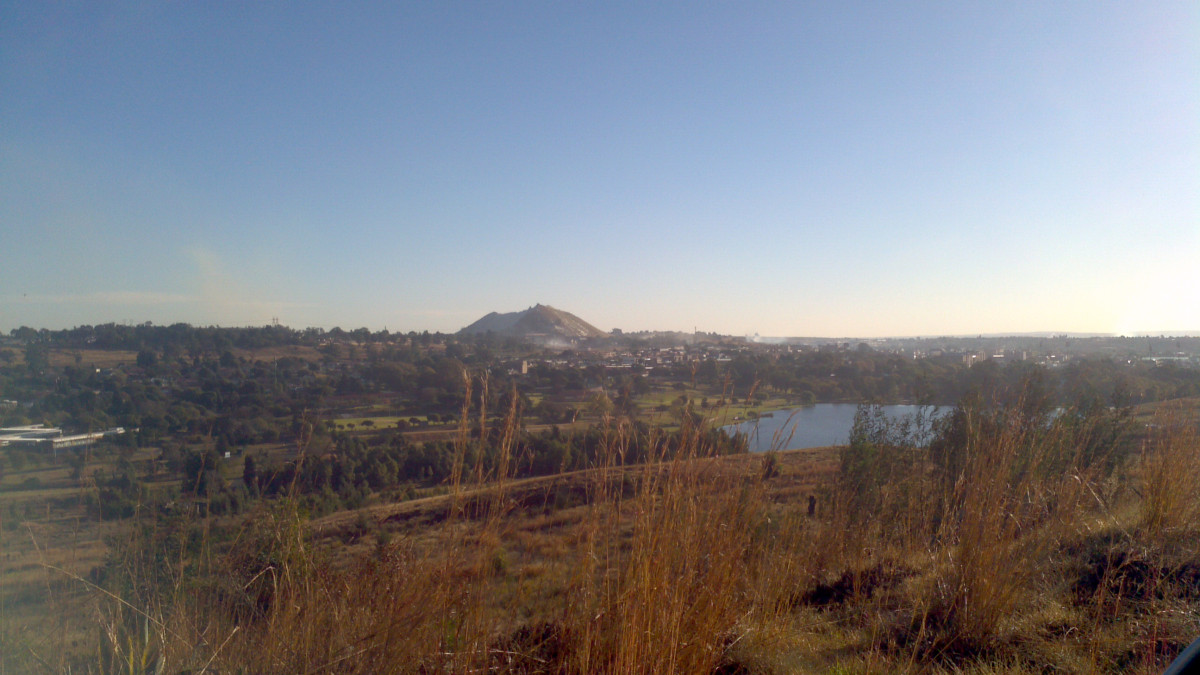
As many as a million people on the Witwatersrand live close to, or even on top of, gold-mine waste that contains radioactive material, environmental experts have warned, calling for urgent action from government and mining companies.
The warning, reported by The Citizen on Tuesday, comes from Mariette Liefferink of the Federation for a Sustainable Environment (FSE), who spoke to eNCA, and from other activists and lawyers working on mining pollution.
Why the dumps are radioactive
On the Witwatersrand, gold ore occurs together with uranium, so much of the waste left behind after gold was extracted contains it. "Most of the mine residue deposits are radioactive," Liefferink said.
- She estimates there are about 270 mine dumps and tailings facilities over roughly 400 square kilometres of Johannesburg's mining belt, containing around 600,000 tonnes of uranium. Some are being reprocessed.
- She said Council for Geoscience surveys found elevated radioactivity in large parts of Johannesburg's CBD and in wetlands, and that many hotspot sites have "no access control, no fences and no warning signs".
- Guidelines recommend a 500-metre buffer around tailings, but estimates cited by The Citizen put about 1.6 million people in Johannesburg and the West Rand living right next to dumps.
The health concern
Liefferink said uranium carries both radiological and chemical risks and has been linked to kidney damage. As uranium and radium in exposed, unlined dumps decay, they release radon gas. Radon disperses quickly outdoors but can build up in homes and schools with poor ventilation. The World Health Organization classifies radon as a cause of lung cancer and says it is the leading cause after smoking.
Residents of Snake Park in Soweto have separately told The Citizen that a nearby untreated tailings facility is "making us ill". No official health study linking specific illnesses to that site was cited.
Who should clean up
Mazi Choshane, an attorney at the Centre for Environmental Rights, said the Department of Mineral and Petroleum Resources needs to strengthen oversight and enforcement of companies' rehabilitation duties. She warned that large miners often sell old rights to smaller firms that lack the money to fix decades of damage, so "environmental liabilities ... are effectively passed down" while the original companies distance themselves.
Related: Jukskei River sewage and dumping · Opinion: a test for Joburg's new council
Sources
What's Your Reaction?
 Like
0
 Dislike
0
 Love
0
 Funny
0
 Wow
0
 Sad
0
 Angry
0

The Republic Times newsroom: independent, ad-free South African journalism. Story tips and corrections: info@republictimes.co.za.







Comments (0)