

Opinion: Eskom Green should not shut out the South African developers who built the country's renewables industry
Analysis: Eskom's request for qualification for up to 6GW of renewables through Eskom Green sets track-record tests that, by Eskom's own published clarifications, only one operating South African project meets. Eskom's need for proven, financeable partners is real, but the rules should give the local industry a route to lead.
This is an opinion piece by Republic Times. It is based on published reporting and the sources listed below.
South Africa's independent power producers have spent 15 years building the country's renewable energy industry. Yet in what has been described as Eskom's most important renewables procurement to date, almost none of them can qualify to lead a bid. That should worry anyone who wants the energy transition to build local capability, not just megawatts.
What Eskom is asking for
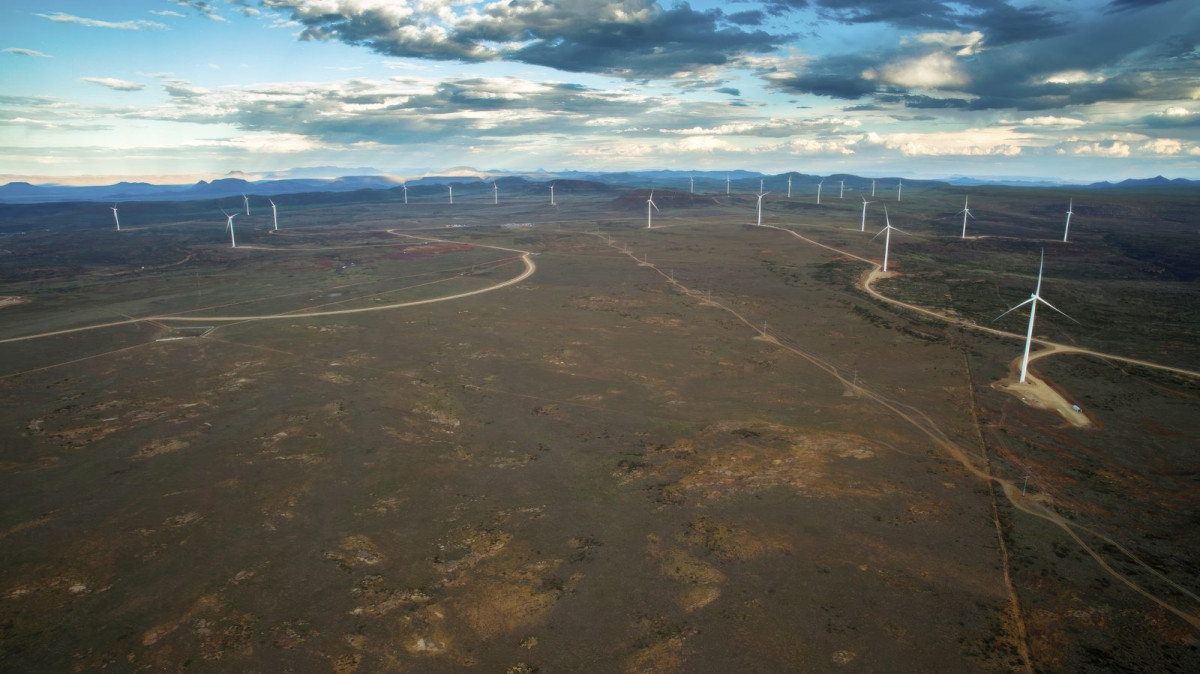
On 2 October Eskom issued a request for qualification to pick strategic partners for Eskom Green, its new renewables subsidiary. The plan is a five-year panel of partners to co-develop up to 6GW of solar, wind and battery storage, with Eskom contributing at least 2GW of solar PV and 1GW/4GWh of batteries on its own land, pv magazine reported. Responses close on 12 January 2027.
According to an analysis published by Daily Maverick, the lead bidder must show an operating single project of at least 240MW and a portfolio of at least 800MW, counting only plants in commercial operation, not ones at financial close or under construction, and without combining phases at one site. Eskom's own clarification responses record a respondent's point that only one operating solar PV or wind project of that size exists in South Africa. When asked whether the rule was meant to exclude local developers, Eskom said no, the analysis reports, but it declined to change it.
Why the bar falls where it does
Local developers are small for a reason: for most of its history the government's REIPPPP programme capped projects at about 75MW for solar and 140MW for wind. Firms built what the state asked them to build. Judging them now against a single-project size the state never procured looks less like a test of skill than a test of history. And this is the second time in about a year: the Independent Transmission Projects programme also set experience rules no local firm could meet, and all seven pre-qualified bidders named in December 2025 were led by international companies.
Eskom's side
Eskom has a fair case. Eskom Green must be investable, lenders want experienced sponsors, and a utility still under financial strain cannot afford partners who stumble on giant projects. Local firms can still join consortiums, and black-ownership rules will apply at the proposal stage. Those are real safeguards.
What should change
- Count what was built. Recognise projects at financial close, and adjacent phases at one site, as evidence of capability.
- Offer a local lead route. A separate qualification track, or a lower threshold for firms with a strong South African record, would keep the bar high without making it foreign-only.
- Explain the choice. If Eskom believes only global players can deliver, it should publish its reasoning so Parliament and the industry can test it.
Eskom Green will shape the grid for decades. The firms that proved renewable energy works in South Africa should have a fair chance to lead it, not only to work for those who do.
Related: Eskom marks 550 days without load-shedding · Eskom's coal supply contracts published
Sources
What's Your Reaction?
 Like
0
 Dislike
0
 Love
0
 Funny
0
 Wow
0
 Sad
0
 Angry
0

The Republic Times newsroom: independent, ad-free South African journalism. Story tips and corrections: info@republictimes.co.za.









Comments (0)