

Mathematicians say an AI-assisted proof of the 167-year-old Riemann hypothesis checks out, but full human review is still to come
Anthropic mathematician Levent Alpöge says he proved the Riemann hypothesis, one of mathematics' most famous unsolved problems, with help from the company's AI model Claude. Two groups behind the Lean proof-checking system say the computer-checked proof is correct. Mathematicians are still weighing what it means, and a formal Clay Institute review lies ahead.
One of the oldest and most famous open problems in mathematics may have fallen, with a lot of help from artificial intelligence.
On Friday, 20 November, Levent Alpöge, a mathematician at the AI company Anthropic, posted a note on his website saying he had found a proof of the Riemann hypothesis while working with the company's AI model, Claude. "I believe I have, working with Claude, discovered a proof of the Riemann Hypothesis," he wrote, according to The Independent. The Guardian reports that he said Claude helped develop the solution over about six weeks.
What is the Riemann hypothesis?
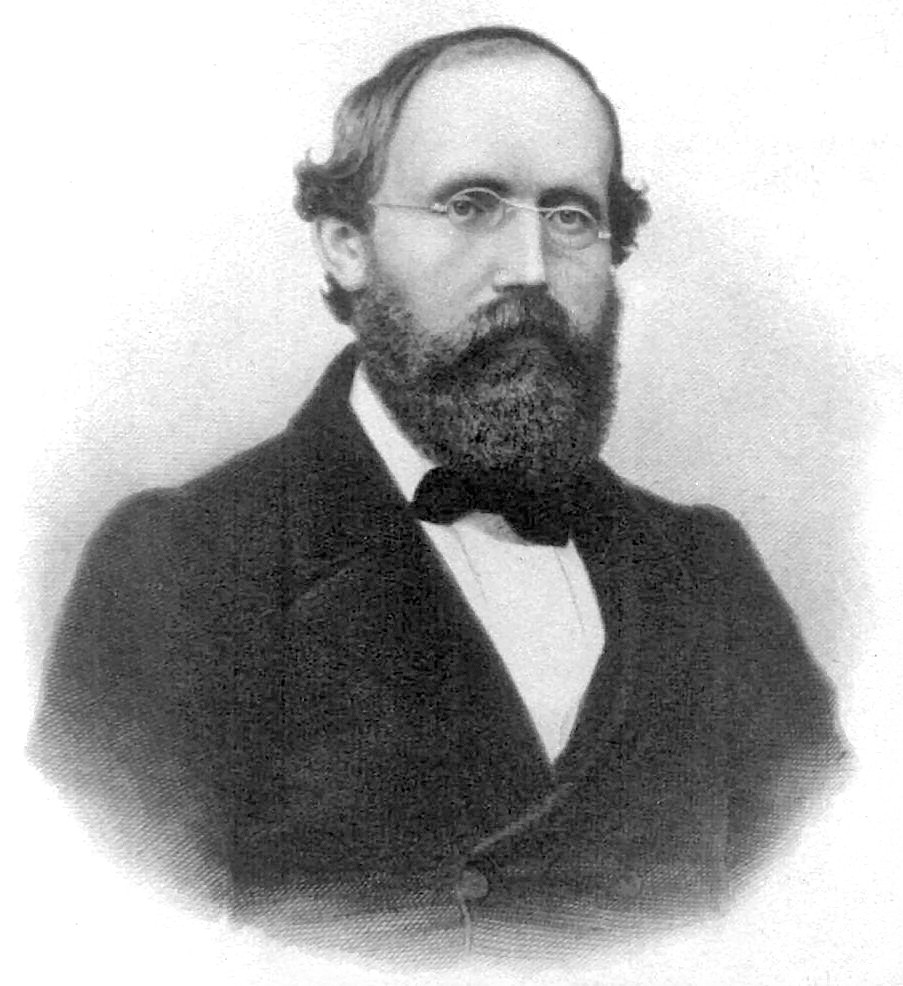
German mathematician Bernhard Riemann proposed it in 1859. It suggests there is a precise hidden pattern behind how prime numbers, numbers divisible only by 1 and themselves, are spread along the number line. David Hilbert listed it among his great challenges in 1900, and in 2000 the Clay Mathematics Institute named it one of seven Millennium Prize problems, each with a US$1 million reward.
Prime numbers sit at the heart of the encryption that protects online banking and messaging, which is one reason the problem is so widely known outside mathematics.
How the proof was checked
Alpöge did not only publish a paper. He released the proof written in Lean, a programming language that lets a computer check every logical step of a mathematical argument.
On Saturday, two groups that support Lean, the Lean Focused Research Organization and the Mathlib Initiative, said they had independently verified it. "We have full confidence that Alpöge's proof of the Riemann Hypothesis is correct, and we congratulate him on this achievement," they said, as reported by The Guardian and Scientific American.
MIT mathematician Andrew Sutherland told Scientific American he had compiled the proof himself and that it had been rechecked using only Lean's three standard axioms. "Honestly the chance that anything is fishy here is approximately zero," he said. Imperial College London's Kevin Buzzard had stressed that the key questions were whether the Lean statement really matches the Riemann hypothesis, and whether the code could be gaming the checker.
What still has to happen
- Under the Clay Mathematics Institute's rules, a solution must be published and gain general acceptance among mathematicians, with a waiting period, before the prize can be considered.
- Mathematicians are still debating what it means when much of the work is done by an AI system. The Guardian notes unease about well-funded private companies driving such results.
- An Italian mathematician, Alessandro Masullo, separately released an incomplete human-written proof attempt on the same day, according to The New York Times as cited by The Guardian. It has not been verified.
Alpöge's note came one day after Anthropic listed on the Nasdaq. He acknowledged that the timing was "horrible" and said he would have finished earlier if he could.
Related: Anthropic shares fall on day two after record IPO · Ramaphosa backs a R100m fund for SA AI startups
Sources
- Scientific American — The AI Riemann hypothesis proof is true, independent mathematicians confirm
- The Guardian — Two groups verify mathematician's claim that Claude helped prove mathematics problem
- The Independent — Anthropic mathematician claims to have proved Riemann hypothesis with help of Claude
What's Your Reaction?
 Like
0
 Dislike
0
 Love
0
 Funny
0
 Wow
0
 Sad
0
 Angry
0

The Republic Times newsroom: independent, ad-free South African journalism. Story tips and corrections: info@republictimes.co.za.









Comments (0)