

Opinion: Minority coalitions are legitimate, but councils must get the rules right before they vote
Republic Times opinion: The parties that formed governments in Mandeni and KwaDukuza did nothing unusual by building majorities without the biggest party. But Mandeni shows how a council that rushes its procedure invites a court fight. With Friday's deadline close, every council should follow the rules to the letter.

This is an opinion piece by Republic Times. It is based on the facts reported in our news coverage, linked below.
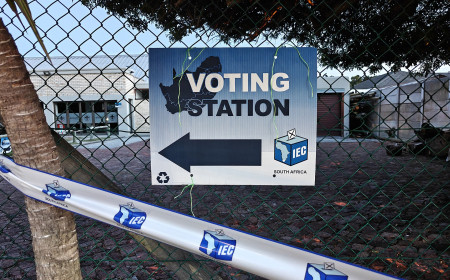
On Wednesday in Mandeni, the MK Party won the most seats but did not get the mayor. It won 17 of 35 seats, one short of a majority. The IFP, ANC, EFF and DA, with 18 seats between them, elected the IFP's Dr Andile Biyela as mayor. A day later in KwaDukuza, the ANC, DA and IFP formed a government with 32 of 59 votes. Our news report has the details.
The arithmetic is the point
Some MK supporters call this cheating. It is not. In a council where nobody has a majority, the mayor is whoever can win the council vote, and in practice that means putting together a majority. Winning the most seats gives a party the best chance to build that majority, not a right to govern. The same rule has worked against the ANC, the DA and others in other councils this month. In Gauteng it is the DA, the biggest party in Tshwane and Johannesburg, that is being kept out.
Voters may dislike a particular deal, and they can punish the parties involved at the next election. That is how the system is supposed to work.
But procedure is not a technicality
Mandeni also shows the other side. According to Scrolla.Africa, MK argues that the mayor, deputy mayor and speaker were elected before all councillors had been sworn in. It has threatened to go to court, and a magistrate has agreed to swear in its councillors on Friday. MK has also asked the KwaZulu-Natal legislature to withdraw Biyela because he is a member of that legislature. The Constitution's rules on who may serve on a municipal council (section 158) are directly relevant to that question.
We do not know whether MK's complaints will succeed, and Biyela's side of the story has not yet been reported. That uncertainty is exactly the problem. If a court later finds a sitting was flawed, residents could face months of disputed authority, frozen decisions and legal bills paid from the municipal budget, in councils that cannot afford them.
What happened inside the Mandeni chamber does not help either. The Mail & Guardian reports that MK councillors disrupted the sitting and that police were called. Disruption is not a legal remedy. If MK believes the vote was unlawful, the courts and the legislature are the right places to fight it, and it has said it will go there.
What councils should do before Friday
Many councils, from Emfuleni to Msunduzi, still have to elect office-bearers by Friday's deadline. Every one of them should do three simple things: swear in all councillors before any vote, make sure every candidate is eligible to serve, and record each vote clearly. Municipal managers and provincial CoGTA departments should be ready to give clear rulings on the day.
Coalitions of minority parties are legitimate. Coalitions that cut procedural corners are a gift to anyone who wants to overturn them. With 27 November close, the parties that want stable councils should make sure their wins hold up in court as well as in the chamber.
What's Your Reaction?
 Like
0
 Dislike
0
 Love
0
 Funny
0
 Wow
0
 Sad
0
 Angry
0

The Republic Times newsroom: independent, ad-free South African journalism. Story tips and corrections: info@republictimes.co.za.










Comments (0)