

SARS’s enforcement problem: when tax disputes take a decade
The claim that nobody files a tax return because court cases take 10 to 20 years does not survive the evidence. What does hold up is narrower, and still serious: on-time filing is weak, disputed debt is growing fast, and some large cases run for 15 years.
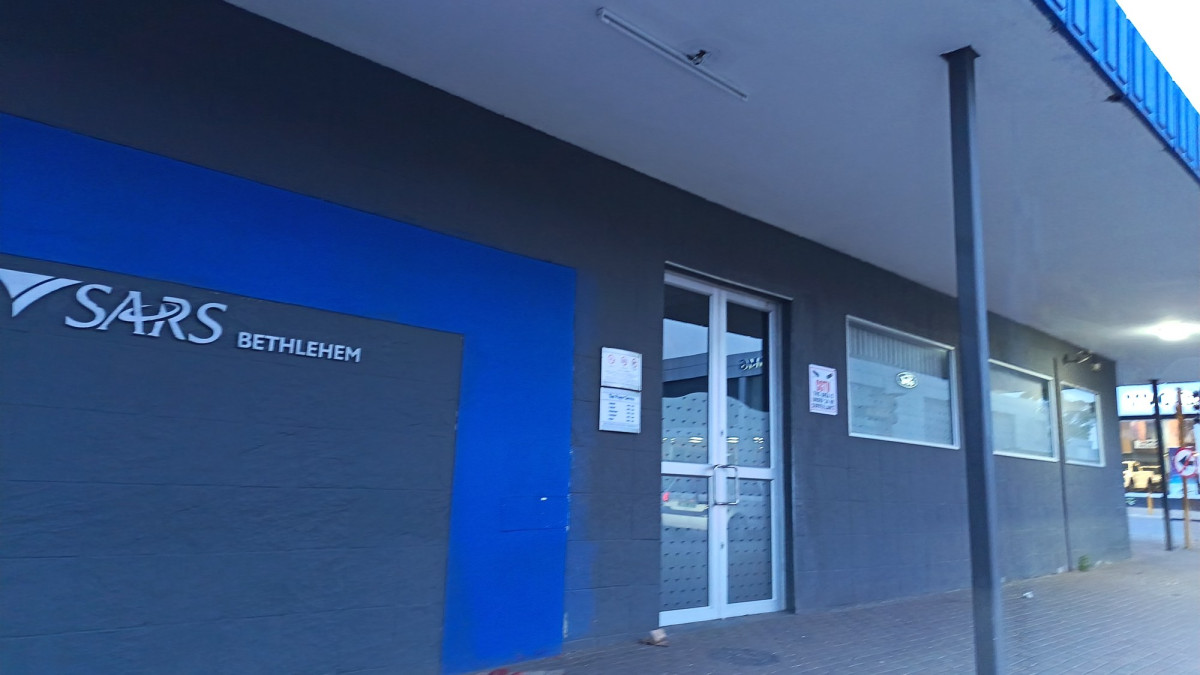
The claim that nobody files a tax return because court cases take 10 to 20 years does not survive the evidence. What does hold up is narrower, and still serious: on-time filing is weak, disputed debt is growing fast, and some large cases run for 15 years.
The idea has an obvious appeal. If the South African Revenue Service (SARS) cannot close a tax dispute for a decade or more, why would anyone bother to file? The official record available at the end of November 2026 is more precise. Millions of people still file, and SARS has just collected a record R2.01 trillion. The enforcement problem is real, but it is not a collapse of the return system. It is weak on-time filing, a swelling debt book, and a dispute process that, once a case leaves the ordinary objection queue and enters court and collection, can last far longer than the law’s deadlines suggest.
Millions still file. Far fewer file on time.
SARS is not short of returns in the way the claim implies. By 15 October 2025, five days before the non-provisional filing deadline, 7,900,531 such taxpayers had already filed, with more than 854,408 returns still outstanding, the revenue service said. In the 2026 filing season SARS auto-assessed more than 6.9 million returns by 30 September, a 20 per cent increase on the previous year.
The weaker number sits in SARS’s own compliance index. In 2025/26, on-time filing compliance across personal and company income tax, value-added tax (VAT) and pay-as-you-earn (PAYE) improved to 55.29 per cent, from 53.37 per cent. On this composite measure, close to half of required filings are still not made on time. Company-tax compliance in the index was 49.37 per cent; personal income tax for individuals was 54.78 per cent. Net collections for the year still reached R2,010.3 billion. What the public record does not show is a mass walkaway from filing because court cases take 10 to 20 years. That causal link is asserted more often than it is evidenced.
A process built for months can still take years
The Tax Administration Act sets out a staged path that, on paper, should be measured in months. A taxpayer generally has 80 business days to object. Under Rule 9 of the dispute-resolution rules, SARS must decide the objection within 60 business days, or 45 after it has requested further documents. If the objection is disallowed, the taxpayer has 30 business days to appeal, extendable to a maximum of 75. The appeal may go to alternative dispute resolution, to the Tax Board for disputes of R1 million or less if both sides agree, or to the Tax Court, and from there to the High Court, the Supreme Court of Appeal and, in limited cases, the Constitutional Court.
In 2025/26 SARS received 160,990 objections, 10.52 per cent more than the year before, and finalised 160,818 in an average of 49 business days, inside the 60-day rule. Most objections were fully or partially allowed; fully allowed cases rose to 56 per cent. It received 6,142 appeals, down 27 per cent, and finalised 5,776. Ninety-five per cent were resolved through alternative dispute resolution. Only 223 were resolved in the Tax Court, down from 254. In tax-related litigation, 107 of 132 judgments and decisions went SARS’s way, an 81 per cent success rate.
Those averages hide missed deadlines in individual cases. The Office of the Tax Ombud recorded that 215 of 2,016 accepted complaints in 2025/26 — 10.66 per cent — concerned objections and alternative dispute resolution. Nine of its 15 open systemic issues at year-end related to objections, appeals and rule-based turnaround failures, and had been on the register for an average of 70 months. The Ombud still listed as “serious/systemic” SARS’s frequent failure to finalise objections within the Rule 9 periods. Emil Brincker, head of tax and exchange control at Cliffe Dekker Hofmeyr, wrote in October 2025 that if a dispute is to be heard by the Tax Court, “it can take up to three years from the date of objection.”
The cases that last a decade, or longer
The 10-to-15-year claim is not a description of the ordinary objection. It is a fair description of some large, litigated disputes, and of the collection fights that follow. A named example of a 20-year court proceeding was not found.
Africa Cash and Carry is the clearest current example. On 15 June 2011, SARS issued income-tax and VAT assessments against the company for the 2003 to 2009 tax periods. The Supreme Court of Appeal dismissed the company’s appeal on 21 November 2019, after the Tax Court had confirmed the liability with amendments, and the assessments became final on 13 December 2019. Collection was still before the courts in 2026. On 2 October 2026 the Pretoria High Court held Africa Cash and Carry (Crown Mines), which had taken over the business for no consideration, jointly and severally liable for R1,499,692,534.63, plus interest from 21 November 2019. From the original assessments to that judgment is 15 years and three months. Section 171 of the Tax Administration Act, the court confirmed, gives SARS 15 years from the date an assessment becomes final to start recovery proceedings.
SARS has itself described a 10-year court battle. In February 2020 it welcomed a Constitutional Court order dismissing Gary van der Merwe’s application for leave to appeal an eviction tied to an outstanding tax debt.
Not every long case has even reached a trial on the merits. In Taxpayer KG (Pty) Ltd, a VAT claim of R6.65 million from a March 2017 return was still undecided in mid-2026. SARS began an audit in April 2019, issued additional assessments in December 2021, and delivered its Rule 31 statement only in September 2024. A Tax Court hearing set down for late July 2026 was then postponed so the taxpayer could amend its case. André Daniels of Tax Consulting SA wrote in September 2026 that almost ten years after the underlying 2016 transaction, and more than seven years after the audit began, “the parties have obtained another judgment, and they still have not had the trial.”
The debt book shows how much money sits in this limbo. At 31 March 2026, overdue tax debt stood at R658.4 billion, up from R512.4 billion a year earlier. Receivables under formal objection or appeal totalled R115.3 billion, up 32.9 per cent, with debt under objection alone up 72.5 per cent to R65.9 billion. Receivables more than 60 months old stood at R169.3 billion.
When a tax case becomes a criminal case
Criminal enforcement is a narrower channel, and it is not empty. In 2025/26 SARS referred 456 cases for criminal investigation, with the highest volumes relating to VAT fraud, income-tax fraud and outstanding returns, and sent 211 cases, with a combined prejudice of R4.367 billion, to the National Prosecuting Authority (NPA). The courts concluded 139 cases, resulting in 135 guilty verdicts involving 207 accused people. At year-end, 1,785 cases remained with the NPA, including 405 already on trial. The NPA, briefing Parliament in October 2026, reported a 97 per cent conviction rate in complex tax matters, or 165 of 170 finalised cases. High conviction rates describe the cases that reach a verdict. They do not describe how long it takes to get there, or how many files are still waiting.
A deterrent that arrives late is a weaker deterrent
None of this supports the claim that “nobody is submitting tax returns.” It does support a harder, sourced conclusion: SARS can collect record revenue while still failing to close disputes and recover debt at the speed the law envisages. People who want a reason not to comply do not need to believe that every return will end in a 20-year trial. They only need to see that filing on time is still optional for a large share of the register, that more than R100 billion can sit under objection or appeal, and that some of the biggest fights are still running a decade and a half after the assessment. SARS’s enforcement problem is not that the courts have emptied the tax system. It is that, for the cases that matter most to deterrence, justice can arrive after the damage has already been done.
Related: Edward Kieswetter’s evidence to the Madlanga Commission and why delayed case-tracking weakens enforcement.
Sources
- SARS Annual Report 2025/26
- SARS — urges non-provisional taxpayers to file before 20 October deadline
- SARS — 2026 Filing Season enters final days
- SARS — Appeals (dispute time limits and Tax Board threshold)
- Office of the Tax Ombud — Annual Report 2025/26
- Pretoria High Court — CSARS v Africa Cash and Carry (Crown Mines) (Pty) Ltd and Another (2 October 2026)
- SARS — SARS wins 10-year battle against non-compliant taxpayer (28 February 2020)
- André Daniels, Tax Consulting SA — Winning the battle, but fighting the war against SARS is far from over (2 September 2026)
- Emil Brincker, Financier Worldwide — Latest developments in South Africa in the context of tax controversy (October 2025)
- NPA — briefing to the Portfolio Committee on Justice, 8 October 2026
What's Your Reaction?
 Like
0
 Dislike
0
 Love
0
 Funny
0
 Wow
0
 Sad
0
 Angry
0

The Republic Times newsroom: independent, ad-free South African journalism. Story tips and corrections: info@republictimes.co.za.













Comments (0)