

Opinion: The Matsulu arrests prove apartheid-era cases can still be brought. The State must not wait another 35 years for the rest
Republic Times opinion: The arrest of three former Security Branch officers, the oldest 86 or 87 depending on the report, over a 1991 killing near Matsulu shows that cases referred by the Truth and Reconciliation Commission can still be brought to court. But witnesses, accused and families are ageing. The NPA should publish a clear plan for the remaining cases now.
This is an opinion piece by Republic Times. It is based on the court and official reports cited below.
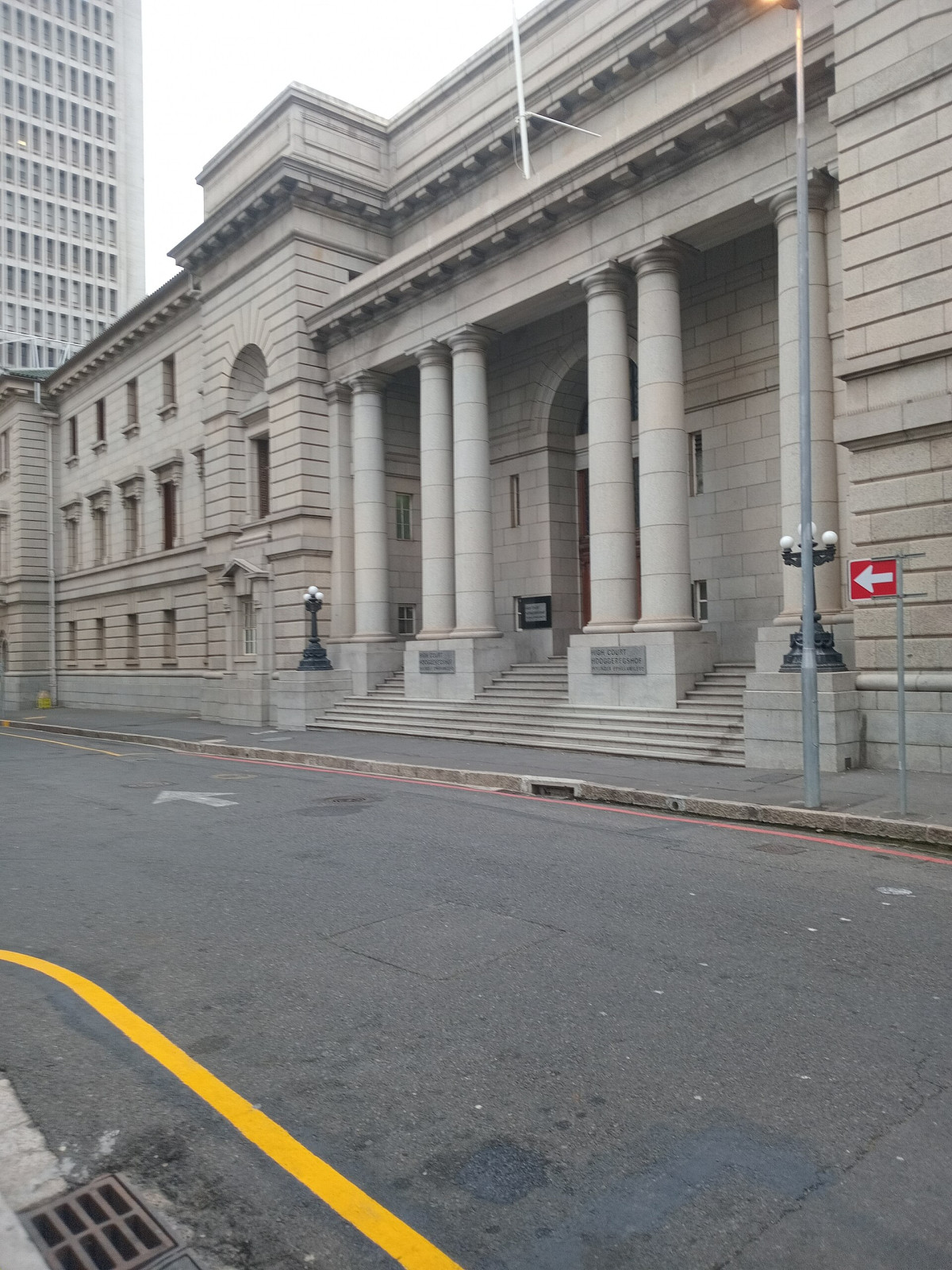
On Tuesday, three men aged 68, 82 and 86 (87, according to the NPA) stood in the Nelspruit Magistrate's Court, charged with murdering a police informer near Matsulu on 5 March 1991. The State says the killing of Adriano Louis Bambo was planned. The men, who held the ranks of lieutenant colonel, brigadier and general in the apartheid-era Security Branch, have not pleaded and are presumed innocent. A court will decide what happened.
What can be said now is that this case did not need to take 35 years.
The facts were on record decades ago
According to Lowvelder, the State told the court the killing had been raised before the Truth and Reconciliation Commission. Former Vlakplaas commander Eugene de Kock testified at TRC amnesty hearings in 2000 that a weapons cache was staged to disguise it. That is 26 years ago.
Last month, De Kock told the Khampepe Commission, which is investigating why TRC cases stalled, that prosecutors never approached him for evidence on several apartheid-era killings. "I was never approached, never asked, no statements taken," he said, as reported by the Mail & Guardian. Former acting national director of public prosecutions Mokotedi Mpshe conceded at the same inquiry that the 2005 prosecution guidelines, later struck down by a court, were unconstitutional, SABC News reported.
Whatever the inquiry finally concludes about why, the delay itself is not in dispute. Families waited while the people who could testify grew old.
Why speed now matters
Every year that passes makes these cases harder. Witnesses die. Memories fade. Accused people may become too ill to stand trial, which is unfair to them as well as to the families of victims. A conviction or an acquittal after a proper trial both give an answer. A case that dies with its witnesses gives none.
The NPA said this week that it remains committed to pursuing apartheid-era cases "regardless of how much time has passed". That commitment is welcome. It should now be matched with:
- A public list. How many TRC-referred cases remain open, and at what stage each one is, without naming suspects who have not been charged.
- Dedicated capacity. Prosecutors and investigators who work only on these matters, so they are not pushed aside by current caseloads.
- Evidence preservation. Taking sworn statements now from elderly witnesses, including people who were inside the security system and have said they are willing to talk.
- Regular reporting to Parliament, so progress can be checked without waiting for another commission.
Fair to everyone
None of this means assuming guilt. The three men in the Matsulu case are entitled to a full defence, and the State must prove its case. But fairness also runs the other way. The families of people killed by state agents were promised that those who did not receive amnesty could face prosecution. The Matsulu case shows that promise can still be kept. The State should keep it while the people involved are still alive.
Related: Three former Security Branch officers charged with 1991 Matsulu murder · Limpho Hani and the Chris Hani inquest
Sources
- The Citizen / Lowvelder — 3 retired Security Branch officers granted bail over 1991 Matsulu murder
- Algoa FM — Apartheid cops arrested and charged for 1991 murder
- Mail & Guardian — Eugene de Kock blames NPA for failure to prosecute apartheid-era crimes
- SABC News — Mpshe concedes 2005 NPA guidelines were unconstitutional
What's Your Reaction?
 Like
0
 Dislike
0
 Love
0
 Funny
0
 Wow
0
 Sad
0
 Angry
0

The Republic Times newsroom: independent, ad-free South African journalism. Story tips and corrections: info@republictimes.co.za.











Comments (0)