

Two Ebola vaccines made for the Bundibugyo strain to be tested in DR Congo’s Bunia from next week as the outbreak passes 5,500 deaths
Two candidate vaccines designed specifically for the Bundibugyo Ebola virus are due to enter phase 2 trials in Bunia, Ituri province, on 26 or 27 November, the WHO says. The outbreak in DR Congo, the country’s worst, has more than 11,000 confirmed cases and over 5,500 confirmed deaths.
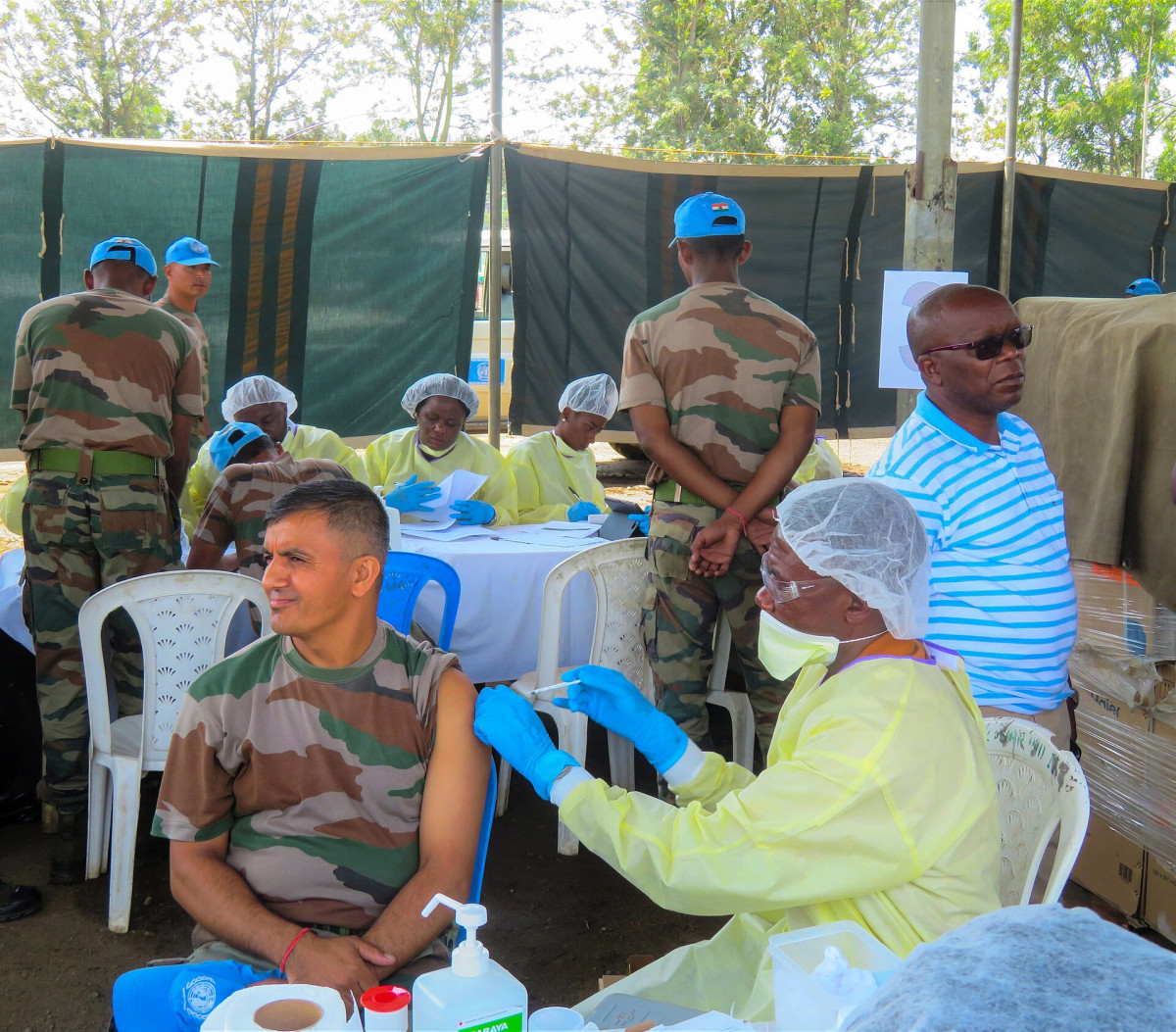
Two experimental vaccines designed for the Bundibugyo species of Ebola, the strain behind the Democratic Republic of Congo’s deadliest outbreak, are set to be tested in the outbreak’s epicentre from next week, the World Health Organization (WHO) says.
There is currently no approved vaccine or treatment for Bundibugyo, which is less common than the Zaire strain that caused earlier large epidemics.
The trial
WHO science official Meg Doherty said phase 2 trials of the two candidates are due to start on 26 or 27 November in Bunia, capital of Ituri province, according to an AFP report published by The Hindu. One is an adenoviral vector vaccine (ChAdOx1) developed by the University of Oxford; the other, mRNA-1469, was developed by Moderna. Both have passed smaller phase 1 studies.
They will join the Tumaini trial, which uses ring vaccination, immunising contacts of known cases who are at high risk. Tumaini began on 23 October with Ervebo, a vaccine already approved against the Zaire strain, to see whether it offers any cross-protection. More than 140 people had been enrolled, and the trial is expected to expand beyond Bunia. If safety and immune-response results are good, the new candidates could move to a full phase 3 trial.
The scale of the outbreak
The WHO counts 5,568 confirmed deaths among 11,376 confirmed cases in DR Congo, according to AFP. Time magazine, citing figures to 19 November, put the wider total above 11,700 cases and 5,700 deaths, with cases also reported in Uganda, Kenya and Nigeria. WHO director-general Tedros Adhanom Ghebreyesus said 400 to 500 new cases were still being reported each week, and that children make up more than a quarter of confirmed cases and a third of deaths.
Experts quoted by Time blamed late detection, the lack of strain-specific tools, mistrust of health workers and cuts to humanitarian funding for the outbreak’s speed. The US Centers for Disease Control and Prevention estimates the outbreak began in February, two to three months before it was declared.
Related: More news from East and Central Africa
Sources
What's Your Reaction?
 Like
0
 Dislike
0
 Love
0
 Funny
0
 Wow
0
 Sad
0
 Angry
0

The Republic Times newsroom: independent, ad-free South African journalism. Story tips and corrections: info@republictimes.co.za.












Comments (0)